Author Archives: accounts

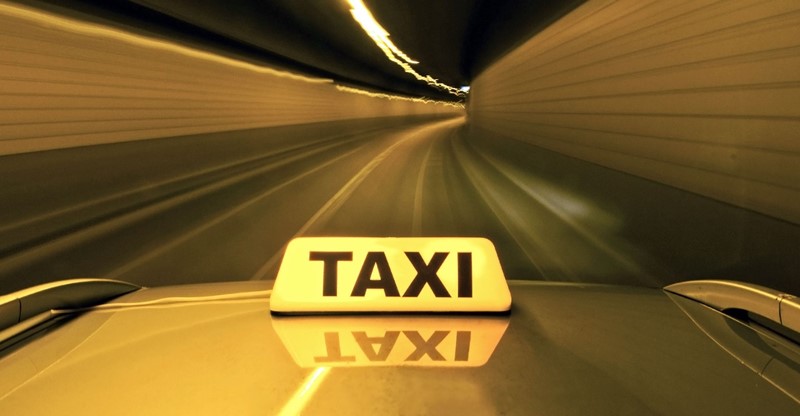
Reclaiming VAT on taxi and ride-hailing fares

Changes announced in the Autumn Budget have removed the use of a niche VAT scheme known as the Tour Operators Margin Scheme (TOMS) for private hire vehicle operators from January 2026.

TOMS was originally designed for tour operators selling travel packages. However, some large ride-hailing firms had used it to reduce their VAT liability by charging VAT only on their commission, rather than on the full fare. Following ongoing legal uncertainty, the government legislated to exclude taxi and private hire journeys from the scheme.

The change was expected to level the playing field, particularly benefiting black cab drivers in London and smaller taxi firms from outside London where passengers contract directly with the driver.

In practice, the outcome has been more complex. Due to Transport for London licensing rules, most fares in London are now subject to VAT. Outside London, some ride-hailing platforms, including Uber, have restructured arrangements so they act as agents rather than suppliers. This change moves the VAT liability to the drivers. As most drivers earn below the VAT registration threshold of £90,000 this means that on rides outside of London VAT is often still not charged.

For businesses, these changes have important implications when reclaiming VAT. Input VAT can only be reclaimed where it is clearly shown on a valid VAT invoice or receipt. If VAT is not separately identified, no reclaim is permitted, although the expense may still be deductible for Corporation Tax purposes.


Source:HM Treasury | 27-04-2026

NIC and tax after reaching State Pension age

If you continue working after reaching State Pension age, your National Insurance position changes, but your Income Tax obligations largely remain the same.

Once you reach State Pension age, you stop paying employee National Insurance contributions (Class 1) on your earnings. However, your employer must continue to pay employer (secondary) Class 1 National Insurance contributions.

If you are employed, you should provide your employer with proof of your age (such as a passport or birth certificate) so that National Insurance deductions can be stopped. If you prefer not to provide this, you can request confirmation from HMRC (known as an age exception certificate) and show this instead.

If you are self-employed, Class 2 National Insurance contributions are no longer due, and you stop paying Class 4 contributions from the start of the tax year following the one in which you reach State Pension age. For example, if you reach State Pension age during 2026–27, your Class 4 NIC contributions will continue until 5 April 2027 and then stop.

Although National Insurance may no longer apply, Income Tax is still payable if your total taxable income exceeds your personal allowance.

You must continue to meet your reporting obligations, including filing a self-assessment tax return where required. If you have overpaid tax or National Insurance, you can claim a refund from HMRC.

Source:HM Revenue & Customs | 27-04-2026

Setting off losses against other income sources

If you are self-employed or a member of a partnership, you may be able to claim tax relief when your business makes a loss. There are several ways trading losses can be used, but each loss can only be used once and specific conditions apply.

For the 2025–26 tax year, losses can be set against your total income for the same year and/or the previous tax year (2024–25). You must use the loss as far as possible in one year before applying any remaining amount elsewhere. If losses are not fully relieved against income, any remaining balance may, in some cases, be set against chargeable gains.

A claim can also be made for losses made in the first 4 years of trade known as early trade losses relief. This allows losses to be carried back against income of the three earlier tax years (2022–23, 2023-24 and 2024–25), starting with the earliest year. Claims must generally be made by 31 January 2027.

Unused losses can be carried forward and set against future profits of the same trade. In certain cases, where a business is incorporated, losses may be set against income from the company (known as pre-incorporation relief).

If your business ceases, terminal loss relief may apply. Losses arising in the final 12 months can be carried back against profits of the same trade for up to three previous tax years, starting with the most recent.

Relief may be restricted if the trade is not commercial or is carried on without a view to profit. In addition, an overall cap applies to certain income tax reliefs, limiting claims to the higher of £50,000 or 25% of adjusted total income.

Source:HM Revenue & Customs | 27-04-2026

Gifts to a spouse or civil partner

Transfers of assets between spouses or civil partners are usually free from Capital Gains Tax (CGT). When you give or sell an asset to your spouse or civil partner, it is treated as a disposal for CGT purposes, but on a ‘no gain, no loss’ basis.

This means no immediate tax is due, and the receiving spouse effectively takes over the original cost and ownership history of the asset. When the asset is ultimately sold, any gain is calculated based on the difference between the original purchase cost and the eventual sale proceeds, not the value at the date of transfer. Records of the original cost should therefore be retained.

There are some important exceptions. The no gain/no loss treatment does not apply if you were separated and did not live together at any point during the tax year of the transfer. It also does not apply where assets are transferred as trading stock for the recipient’s business to sell on. In these cases, the transfer is treated as taking place at market value, and a CGT liability may arise for the person making the transfer.

Similar rules apply to gifts to charity. Generally, no CGT is due on outright gifts. However, if an asset is sold to a charity for more than its original cost but less than market value, a gain may arise based on the actual sale proceeds.

Source:HM Revenue & Customs | 27-04-2026

Cash flow resilience in uncertain trading conditions

Rising costs and economic uncertainty have made cash flow management more important than ever. While many businesses focus on profit, it is cash that determines whether a business can meet its day to day obligations and take advantage of new opportunities.

A sensible starting point is to review how quickly cash is collected from customers. Slow payment remains one of the most common causes of pressure. Simple steps such as issuing invoices promptly, setting clear payment terms, and following up overdue balances consistently can make a noticeable difference. In some cases, requesting deposits or staged payments can reduce exposure on larger jobs.

It is equally important to review payments to suppliers. Where possible, aligning payment terms with customer receipts can ease pressure on working capital. Even small changes to timing can help smooth cash flow over the course of a year.

Many businesses benefit from preparing a short term cash flow forecast. A rolling 13 week forecast, updated regularly, provides visibility over expected inflows and outflows. This does not need to be complex, but it should highlight potential pinch points early enough for action to be taken.

Business owners should also keep an eye on early warning signs. These may include increasing debtor days, falling margins, or a growing reliance on overdrafts. Spotting these trends early allows corrective action before issues become more serious.

Regular review and small adjustments can significantly improve cash flow resilience. If you would like help reviewing your current processes or preparing a simple forecast, we would be happy to assist.

Source:Other | 26-04-2026